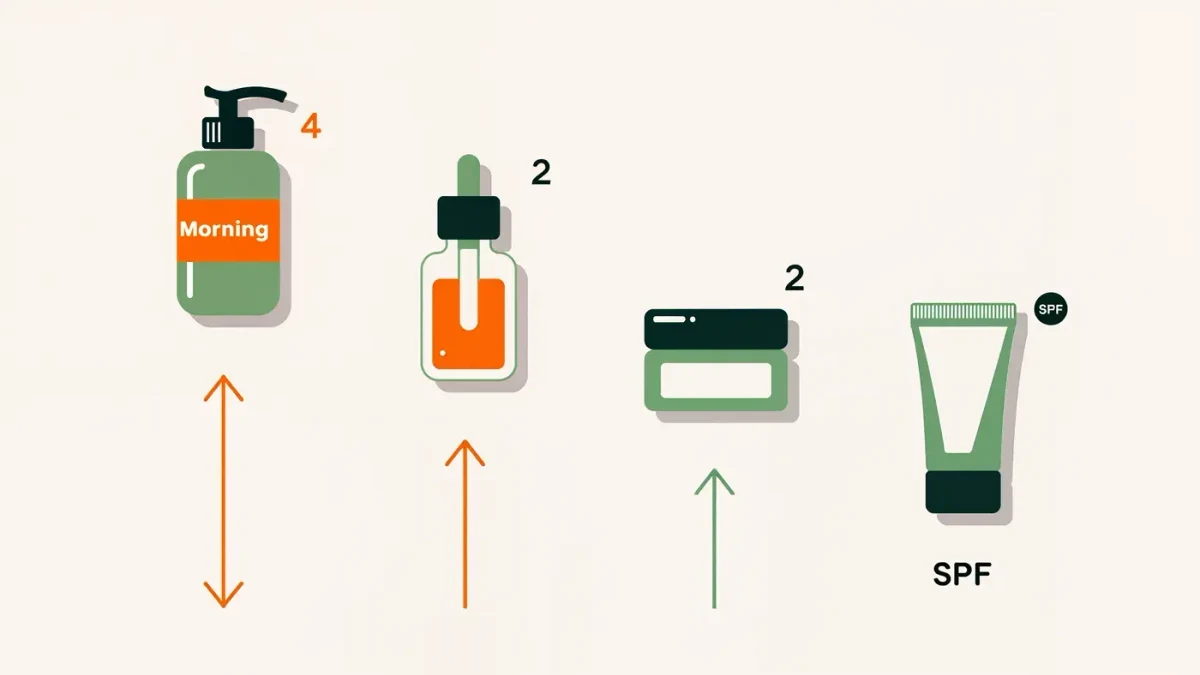
Learning how to use vitamin C serum comes down to timing and sealing: apply it in the morning on clean, dry skin, let it settle for a minute, then follow with moisturizer and sunscreen. Food first: adults need about 75 to 90 milligrams of vitamin C a day from diet, according to the NIH Office of Dietary Supplements factsheet, and no serum replaces that. Topically, the vitamin works as an antioxidant on the skin's surface, where studies summarized by the same NIH office note concentrations can be far higher than in blood when applied directly. Used consistently in the morning, it is the one antioxidant step most beginners actually need.
BEAUTYISE publishes information, not medical advice. Vitamin C products sting some people, especially at higher strengths, so patch test on your inner forearm for two days before the first full-face use, and see a dermatologist if you have a condition such as rosacea or eczema that reacts to new products easily.
What does topical vitamin C actually do?
It donates electrons to neutralize free radicals, which are unstable molecules produced by ultraviolet light and pollution. In plain terms, it blunts some of the day-to-day oxidative stress that contributes to dullness and uneven tone. Peer-reviewed reviews of topical vitamin C describe three realistic benefits: a modest brightening effect, a supporting role in the skin's natural collagen production, and a small assist to sunscreen against UV damage. The assist is real but secondary. The AAD position, echoed in its sun protection guidance, is that sunscreen is the foundation; antioxidants are the supporting cast.
Morning or night?
Morning, for most people. Vitamin C is used up as it neutralizes free radicals, and the main source of those radicals during the day is the sun, so applying it in the morning puts it to work when the demand is highest. Night use is not wrong, and some people prefer it because their morning routine is rushed. If you are starting out, pick one time, keep it daily for eight weeks, and judge the result on tone and overall brightness rather than on any single spot.
How do you apply it, step by step?
The full sequence takes about four minutes.
- Cleanse and dry, about one minute. Unlike hyaluronic serums, L-ascorbic acid prefers dry skin; water on the surface can raise the pH and reduce uptake, as formulator guidance in dermatology reviews notes.
- Dispense a pea-sized amount, five seconds. Two to three drops is enough for the whole face. More product does not mean more absorption.
- Press over face and neck, about twenty seconds. Avoid the immediate eye area. A brief tingle is common; a persistent burn is a signal to rinse and stop.
- Wait one minute, then moisturize. A plain moisturizer buffers any sting and adds the barrier lipids vitamin C serums lack.
- Finish with sunscreen, every morning. Broad-spectrum SPF 30 or higher, as FDA sun protection guidance advises. Vitamin C without sunscreen is half a routine.
Skip the morning serum on days you exfoliate with strong acids if your skin is sensitive, and move vitamin C to the evening instead.
Related stories: Mineral vs Chemical Sunscreen: Which Filters Do What? · What Hyaluronic Acid Actually Does, and How to Apply It Right.
Which form should you buy?
L-ascorbic acid is the most studied form and the least forgiving. Derivatives such as sodium ascorbyl phosphate, magnesium ascorbyl phosphate, and ascorbyl glucoside are more stable and gentler, and reviews note they convert to active vitamin C gradually in the skin. A reasonable beginner ladder: start with a derivative-based serum at around 5 percent, and move to L-ascorbic acid between 10 and 20 percent only if your skin stays calm. Above 20 percent, studies summarized in dermatology reviews show no meaningful additional uptake.
| Form | Stability | Irritation risk | Best for |
|---|---|---|---|
| L-ascorbic acid | Low once opened | Moderate to high | Experienced users wanting maximum evidence |
| Sodium/magnesium ascorbyl phosphate | High | Low | Sensitive skin, beginners |
| Ascorbyl glucoside | High | Low | Daily long-term use |
What should you pair it with, and what should you separate?
Vitamin C pairs well with vitamin E and ferulic acid, which stabilize it and extend its antioxidant work, a combination supported by peer-reviewed formulation studies. It also sits comfortably with sunscreen and with most moisturizers. Two combinations need care. First, pure L-ascorbic acid plus strong acids or retinol in the same sitting invites stinging; separate them by using vitamin C in the morning and the active at night. Second, benzoyl peroxide can oxidize vitamin C on contact, so use them at different times of day. Niacinamide, despite an old myth, does not need to be separated; reviews find the combination compatible.
A note on expectations, because this ingredient collects them. Topical vitamin C will not erase established dark spots or replace prescription treatment for melasma; the clinical studies behind it measure modest improvements in overall tone, texture, and fine lines, mostly over two to three months. It is also not a substitute for sunscreen in any sense, since no antioxidant absorbs or blocks ultraviolet light the way a filter does. What it does well is narrow and useful: it takes some of the daily oxidative load off the skin and, over weeks, leaves tone looking a little more even. Judged on that scale, it is a reasonable habit. Judged on promises of transformation, it will always disappoint.
How do you keep it from going off?
Store the bottle cool, dark, and closed, and note the opening date. L-ascorbic acid oxidizes in the presence of light, air, and heat. An amber or airless pump bottle is worth choosing over a wide dropper jar. A fresh serum is pale straw-colored; a deep orange or brown tint means it has oxidized and should be replaced, a shelf-life point dermatology reviews make consistently. Refrigeration slows the process and is reasonable if your bathroom runs warm.
How long until you see anything?
Give it eight to twelve weeks of daily morning use before judging, which matches the timelines reported in clinical studies of topical vitamin C for tone and texture. If your skin looks calmer and more even by week six, you are on track. If you see nothing by week twelve, the honest answer is that your sunscreen and moisturizer are doing the heavy lifting, and the serum can go.