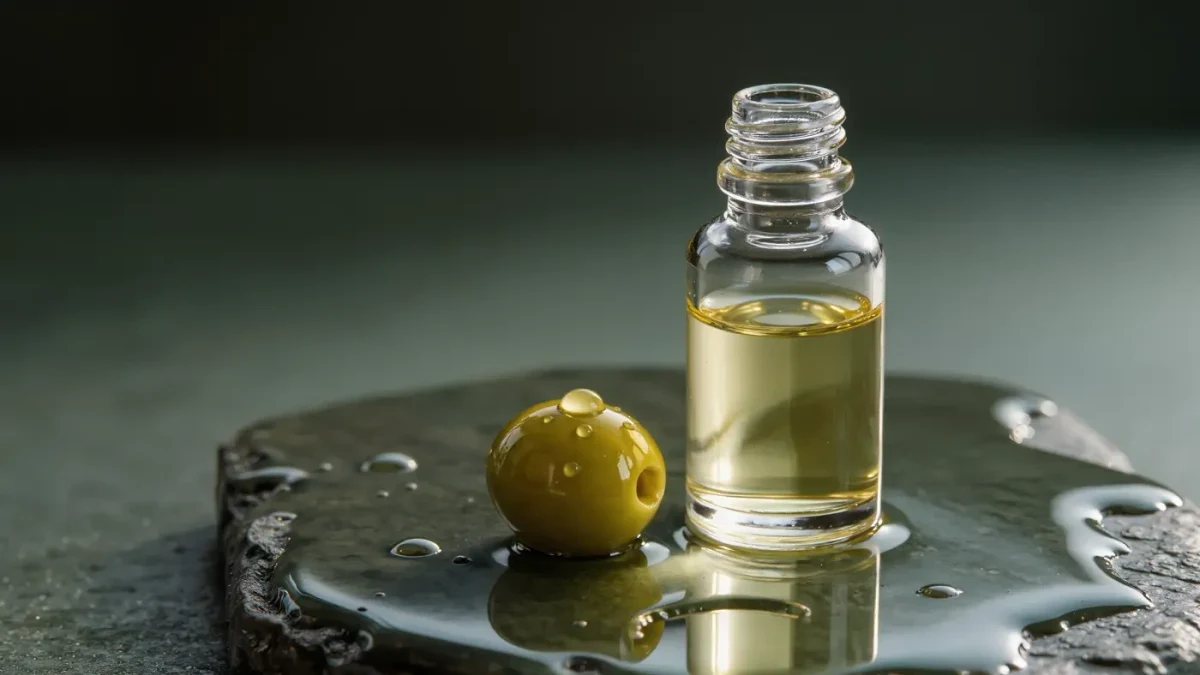
Squalane is a lightweight emollient oil made by hydrogenating squalene, a lipid that human skin produces naturally and that makes up roughly 10 to 15 percent of the sebum on an adult face, according to dermatology reviews of skin surface lipids summarized on NCBI's PubChem database. Because its structure so closely matches something your skin already makes, squalane spreads thinly, absorbs without a greasy film, and rarely causes reactions, which is why it has quietly become the default oil in moisturizers, serums, and even sunscreens. Reviews note that sebum squalene declines with age, which fits the observation that squalane feels comfortable on skin of nearly every age and type.
BEAUTYISE publishes information, not medical advice. Squalane suits most people, but if you have acne that a doctor is treating or skin that reacts to many oils, check with your dermatologist, and patch test on the inner forearm for two days before the first full use.
What is the difference between squalene and squalane?
One hydrogenation step. Squalene, with an e, is the unstable oil in your sebum and originally in shark liver, which is where the cosmetics industry sourced it for decades. Squalane, with an a, is squalene after hydrogenation, a process that saturates the molecule, making it far more stable against oxidation and giving it a longer shelf life. Reviews of emollient chemistry note this is why formulators prefer squalane: squalene goes rancid quickly on a bathroom shelf. Today's squalane comes mainly from olives or from sugarcane fermentation, and most brands state the source on the label.
What does squalane actually do?
It softens and seals, in the mildest way an oil can. Squalane is an emollient: it fills the small gaps between surface cells and leaves a thin, flexible film that slows water loss. Peer-reviewed studies of squalane-containing emulsions report improved skin softness and reduced dryness without significant irritation, and casein for its reputation, its gentle profile comes from being non-comedogenic in standard testing and chemically similar to sebum. What it does not do is treat acne, fade pigment, or stimulate collagen. It is comfort, repair conditions, and finish — and on skin irritated by actives, that comfort is exactly the point.
Related stories: What Ceramides Do for Your Skin: The Barrier's Own Mortar · What Urea Does in Skincare: Humectant at Low Percentages, Keratolytic at High.
Will it clog pores or feel greasy?
Less than almost any other oil, which is not the same as never. Squalane scores low on comedogenicity in the standard rabbit-ear and human patch testing reported in reviews, and its dry, fast-spreading finish is why oily skin types often tolerate it when they cannot tolerate coconut or mineral oil. Texture still depends on dose: three to four drops is a full face, and more will sit where you put it. If your skin is very oily, apply squalane at night only, or look for it inside a gel-cream where it is already dosed for you.
| Skin type | How to use squalane | When to apply |
|---|---|---|
| Dry | 3-4 drops over moisturizer as a seal | Morning and night |
| Combination | 2-3 drops, pressed over dry zones only | Night |
| Oily, acne-prone | Use a squalane gel-cream instead of a straight oil | Night |
| Sensitive, retinoid-treated | Layer over or sandwich around the retinoid | Night, as needed |
How do you add it to a routine?
Squalane goes last, or nearly last, because oils seal what is underneath. The sequence: cleanse, apply any water-based serums, apply moisturizer, then press three or four drops of squalane over the top for about twenty seconds. On retinoid nights, the sandwich method works well: a thin layer of squalane, the retinoid, then squalane again, which buffers the edge of irritation; dermatology guidance on retinoid use emphasizes moisturizing generously alongside the active. In the morning, squalane sits comfortably under sunscreen. Total added time: under a minute.
One shopping note saves money. Squalane is chemically the same whether it came from olives, sugarcane, or a lab bench, so a plain bottle at a modest price is not a compromise; what you pay extra for is texture engineering, like a drier finish or added vitamin E. Check that squalane appears near the top of the ingredient list rather than after the preservatives, which tells you the percentage is meaningful. Beyond that, the claims on the box matter less than how three drops behave on your skin overnight.
Is squalane sustainable?
The modern supply chain mostly is, and the label tells you. Shark-derived squalene drove conservation campaigns from the 1970s onward, and the industry moved largely to olive oil extraction and, later, sugarcane fermentation, which yields a synthetic-identical squalane with a smaller land footprint. Reviews of cosmetic lipid sourcing describe sugarcane-derived squalane as the current high-volume route. If sourcing matters to you, olive or sugarcane on the label answers it; unbranded oils without a stated source are the ones to question.
Who can skip it?
Anyone whose moisturizer already feels sufficient. Plenty of creams list squalane mid-ingredients, and if your skin stays comfortable through winter on that alone, a separate bottle is duplication. The cases where a dedicated squalane oil earns its shelf space: retinoid users fighting flaking, dry skin in cold climates, and anyone whose skin drinks lotion and asks again an hour later.