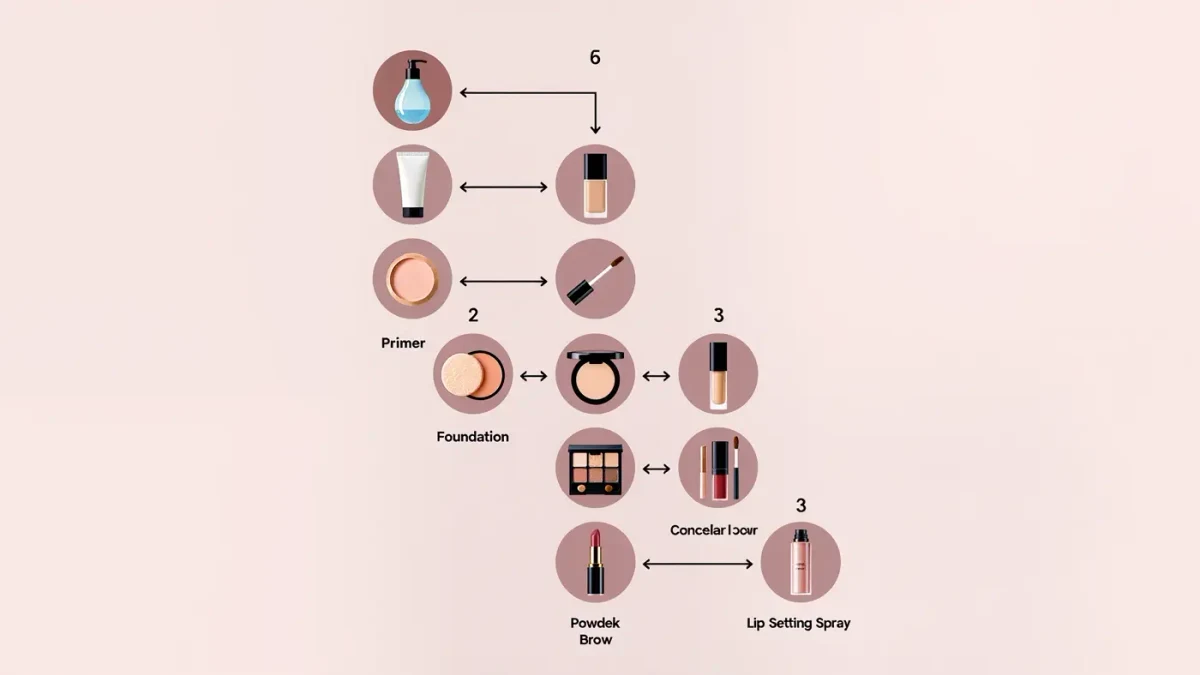
The order to apply makeup after skincare is: primer where needed, base, concealer, setting powder on oily zones, then contour, blush, and highlighter, followed by eyes, brows, lips, and a final setting pass. Behind that list sit three principles — thin before thick, dry before wet, and eyes before face — and once you understand them you can reconstruct the order for any product a brand invents next. Formulas matter more than brands here: a product's texture, not its name, decides where it goes (FDA, 2026).
Why does order matter at all?
Two reasons. First, texture compatibility: each layer must sit on the one beneath it, and powder pressed into wet cream patches, while cream dragged over powder streaks. Second, contamination of light: face powder dusts the under-eye area, and eyeshadow fallout lands on the cheeks, so sequencing controls cleanup. A good order minimizes both problems and shortens the routine, because you do the messy steps before the delicate ones.
The full order, step by step
- Skincare, finished and absorbed. Moisturizer and sunscreen go first and get a minute to set. Makeup applied over damp skincare slides; skincare skipped entirely makes base cling to dry patches.
- Primer, only where needed. Mattifying primer on the T-zone or gripping primer on dry zones. Optional on good-behavior days.
- Base. Foundation or tinted moisturizer, applied thin and built where needed. This is the widest layer, so everything later sits on it.
- Concealer. Under the eyes and on blemishes. Over base, concealer can be matched precisely and blended without disturbing the foundation beneath.
- Setting powder, partial. Press translucent powder through the T-zone and under the eyes only. This locks the layers that move and creates a dry canvas for powder color products.
- Contour, then bronzer, then blush, then highlighter. Cream versions follow this exact ladder; powder versions follow it after the base is set. Structure goes down first, warmth second, color third, light last.
- Eyes. Primer if you use it, shadow, liner, then mascara. Doing eyes after the face means shadow fallout can be swept off finished cheeks without damage.
- Brows. Fill, brush through, set with gel. Brows after eyes because the frame should match the finished eye look, not predict it.
- Lips. Liner, then lipstick or gloss. Lips last because nothing above them drips, and they are the fastest thing to reapply.
- Final set. A light setting spray mist, or a last check and cleanup with a small concealer brush along the edges.
The whole sequence runs fifteen to twenty minutes for a full face, closer to ten when some steps are skipped.
What are the three principles that explain the order?
- Thin before thick. Fluids first, creams second, powders last. Any product heavier than the layer beneath it will lift or streak it.
- Dry before wet. Let each layer set before the next touches it, especially before powder. A thirty-second pause between base and powder is the cheapest wear improvement available.
- Eyes before face. Only if you wear heavy shadow, whose fallout is inevitable. Light shadow users can keep eyes after face without consequence.
When does the standard order change?
Three common exceptions. Heavy shimmer or glitter shadow: do eyes completely first, so fallout cleans up before any base exists. Under-eye concealer on very dry skin: some artists apply it before base for a thinner layer. And single-product days need no order at all — concealer alone or blush alone carries its own routine. The list serves you, not the reverse; on a four-product day the only binding rule is cream before powder.
| Step | Why it sits there | Skip when |
|---|---|---|
| Primer | Creates a uniform surface over skincare | Base holds fine without it |
| Base | Widest, thinnest layer; canvas for all | Good skin day, use concealer only |
| Setting powder | Locks moving zones, preps dry canvas | Dry skin with cream-only color |
| Cheek ladder | Structure, warmth, color, light — each sits on the last | Any layer you do not want |
| Eyes before face | Fallout sweeps off bare skin, not finished base | Light, low-fallout shadow |
Does the order differ for cream and powder products?
Yes, and this is where most confusion lives. Cream cheek products go over a damp or freshly set liquid base, before any powder, layered in the ladder order. Powder cheek products go after setting powder, once the face is dry. Mixing the two, powder into wet cream, is the single most common cause of patchy blush and blotchy contour. If you own both formats, decide the day's format before you start, not mid-routine.
What order should beginners learn first?
The four-product version: moisturizer, base or concealer, blush, mascara. That sequence teaches the core skills — blending over skincare, cream blending, and placement — without overwhelming a morning. Add one product per week in the order of the full list above, and each addition has a clear home instead of competing for space with four others.
FAQ
Should concealer go before or after foundation?
After, for most people. Over foundation you can see exactly what still needs covering and use less product. Before foundation is a valid technique for very dry under-eyes or heavy redness, when a thin early layer avoids disturbing the base later.
Do I apply bronzer before or after blush?
Bronzer first, blush second. Bronzer lays down warmth, and blush sits on top as the focal color. Reversed, the blush moves or dulls under the bronzer brush, and you lose the placement you chose.
Does sunscreen go before or after makeup?
Sunscreen is the last step of skincare and the first layer under makeup, applied after moisturizer and before primer. It needs its own minute to set. Makeup on top does not replace it; see our skincare layering guide for that routine's full order.
Can I apply makeup before sunscreen finishes setting?
Give it about a minute. Layering immediately over wet sunscreen can disturb the film that makes protection even, and it is also what makes base pill or roll during blending.
For more context, read How to Make Makeup Last All Day: Seven Steps From Skin Prep to Setting.
For more context, read how to apply blush.
For more context, read How to Contour Subtly: Shadow, Not Stripes.