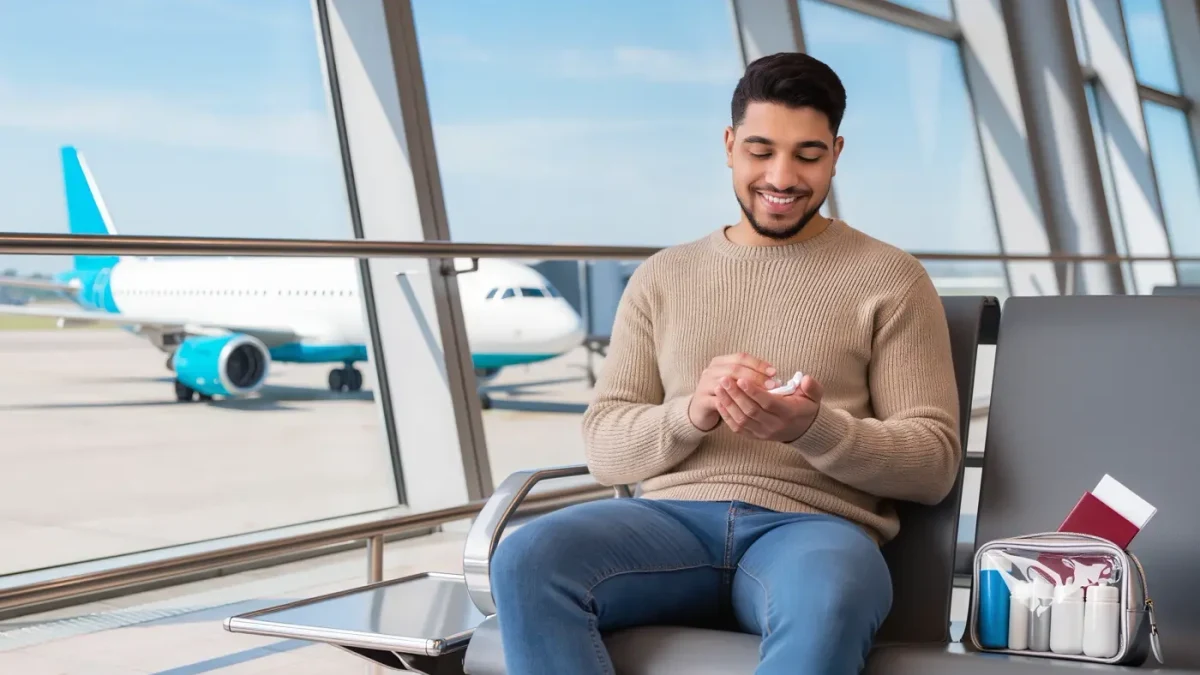
Adjusting your skincare for travel takes three moves: pack a stripped-down five-item kit in mini containers, add extra moisture for the flight, where cabin humidity can drop below 20 percent, and make one or two swaps once you know the climate at your destination. You do not need a travel routine that is different from your home routine; you need your home routine at 60 percent strength, with hydration carried in a tube instead of a shelf.
BEAUTYISE publishes information, not medical advice. A skin reaction that spreads, blisters, or lasts more than a few days after a trip should be shown to a clinician, since travel can introduce new allergens and sun exposure patterns.
What should go in a travel skincare kit?
Five items cover nearly every trip of two weeks or less:
- Gentle cleanser in a 100 ml or smaller bottle, which also satisfies airline liquid limits.
- Moisturizer in the texture your skin likes, or slightly richer than usual.
- Sunscreen, SPF 30 or higher. Non-negotiable, including city trips, since you will likely be outdoors more than at home.
- One active you already use, such as a retinoid or acid, only if the trip is long enough to keep using it safely.
- Lip balm and a small hand cream, the two areas that suffer first in transit.
Decant into labeled travel bottles a few days early and test that the pumps actually work; discovering a stuck dispenser in a hotel bathroom is a reliably bad start to a morning.
What does flying actually do to your skin?
Cabin air is exceptionally dry. Aviation medicine literature puts cabin humidity in the range of 10 to 20 percent on typical long-haul flights, far below the 40 to 60 percent most indoor spaces aim for, so water evaporates from exposed skin steadily over the hours aloft. Add recycled air, recycled beverages, and less sleep, and the classic arrival face is both dehydrated and slightly puffy. The effects are temporary, but a few habits make the flight easier on your skin: skip makeup on long flights, apply moisturizer before boarding and once mid-flight, drink water at your usual rate, and avoid alcohol, which dehydration-wise works against everything else you are doing.
How should you pack for airport security?
Liquids, gels, and creams go in containers of 100 milliliters or less, all fitting in one transparent quart-sized bag under U.S. Transportation Security Administration rules, with similar rules across most aviation authorities. Solid formats sidestep the problem entirely: cleansing bars, balm moisturizers, and stick sunscreens travel as solids. If you check a bag, keep your cleanser, moisturizer, and sunscreen in the carry-on, because delayed luggage should not cost you a routine, and sunscreen is the one item you do not want to buy blind at a resort markup.
How do you adapt to a different climate?
Make at most two changes so your skin can tell you what it thinks of each one:
| Destination climate | Main issue | Swap |
|---|---|---|
| Hot and humid | Oil and clogged pores | Lighter gel moisturizer, gel sunscreen, gentle cleanser more often after sweating |
| Cold and dry | Water loss, flaking | Richer cream, add occlusive layer at night, humidifier if staying put |
| High altitude or beach sun | UV intensity | SPF 50, reapply every 2 hours, SPF lip balm and sunglasses |
| Chlorinated pools, hard water | Irritation | Rinse after swimming, moisturize on damp skin |
Sun deserves special attention on any warm-weather trip. Vacation routines concentrate sun exposure into days when skin has had no time to adapt, which is why dermatology guidance emphasizes generous application and two-hour reapplication precisely when people are on holiday, not only in ordinary weeks.
Related stories: A Simple Skincare Routine for Teens: Three Products and Two Rules · Morning Versus Evening Skincare: What Changes and Why.
Should you keep using actives while traveling?
On trips of a few days, pausing retinoids and exfoliating acids is the calmer choice: changed water, changed climate, and changed sleep already stress the skin, and actives amplify any irritation that shows up. On longer trips, keep your active only if your routine has been stable for weeks and you are sure the travel sizes are the real product, since decanted look-alike bottles are easy to mix up. Introduce nothing new during the first 48 hours anywhere, so if your skin reacts, the destination is the obvious suspect rather than a fresh serum.
What is the arrival-day routine?
Keep it deliberately boring: cleanse with your usual gentle product, moisturize generously on damp skin, and apply sunscreen if you arrive in daylight. If your skin feels tight after a long flight, a hydrating layer under the moisturizer helps more than scrubbing, and puffy mornings respond better to cold compresses and sleep than to caffeine eye products. By day two, your skin usually settles into the destination, and your routine can simply be its home self with the one or two climate swaps you planned.
Travel skincare is logistics, not alchemy: the right five bottles, one plane habit, and one climate swap.
What should the trip home look like?
Reverse the logic: keep the kit intact, resist souvenirs in skincare form until your skin is home, and plan a quiet evening after you return. Sun-exposed, wind-chapped, or chlorine-tested skin benefits from a bland few days of cleanser, moisturizer, and nothing new, so any reaction has room to settle before you reintroduce actives. Check your travel bottles for leaks before they go back in the drawer, restock anything that ran low, and leave the packed kit assembled; the easiest travel routine is the one already packed for next time.
FAQ
Do I need to wash my face on a plane?
It is optional. Bathroom water on planes is limited, and a mid-flight moisturizer layer over clean skin applied at home usually serves better than a splash with unfamiliar water. Save the full cleanse for arrival.
Can I bring full-size sunscreen through security?
Not in carry-on on most airlines if it exceeds 100 ml, though solid sunscreen sticks travel freely. Checked luggage has no such limit, so pack the big bottle there and a stick or mini in your carry-on.
How do I stop my skin breaking out when I travel?
You can lower the odds: keep the routine identical to home, add nothing new in the first two days, cleanse after sweating, and change pillowcases at the hotel where practical. Some fluctuation is normal and usually resolves within days of returning.
Is hotel water bad for skin?
Hard or heavily chlorinated water can leave some skin feeling drier or tighter. Rinsing with bottled water is an overreaction for most people; a thorough moisturizer on damp skin afterward is enough.